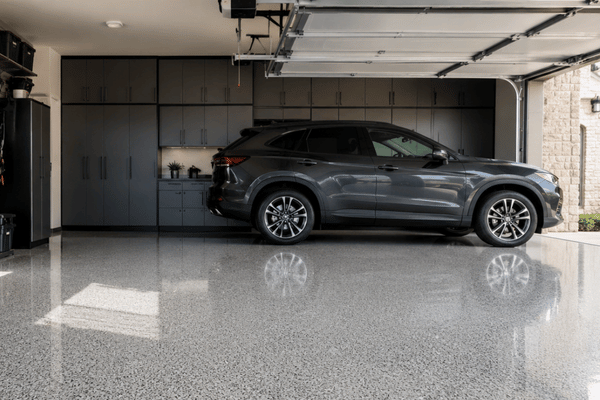
The epoxy garage floor Fort Worth homeowners choose can help protect concrete from heat, oil, stains, and daily wear. Austin homeowners are making the same upgrade for clean, strong garage spaces that are easier to use.
Texas garages take a lot of abuse. Hot summers, sudden cold snaps, car fluids, tools, bikes, and foot traffic can wear down bare concrete. Epoxy helps by forming a hard coating over the slab. It does not fix every concrete issue, but it can make a sound slab last longer and look better.
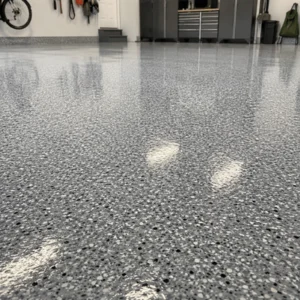
An epoxy garage floor is a coated concrete floor made with resin and hardener. Once mixed, the coating cures into a tough surface that bonds to prepared concrete.
The result is a garage floor that resists many common stains, spills, and scuffs. It can also be made with color flakes, a gloss finish, or a more muted look.
Epoxy is used in homes, auto shops, warehouses, and work areas because it handles daily wear well. In a home garage, it can support parked cars, storage racks, gym gear, and hobby tools.
According to Grand View Research, epoxy was the largest product segment in the U.S. concrete floor coating market in 2022. This shows how common epoxy is for concrete floor care.
Fort Worth and Austin homes deal with heat, dust, rain, and fast weather shifts. Bare concrete can absorb oil, hold dirt, and show stains fast. Small cracks can also get worse when water gets into weak spots.
Epoxy helps protect the top layer of the slab. It can block many surface spills and make cleanup much easier. The slab still needs to be dry, sound, and clean before work starts.
Garage use has also changed. Many Texas homeowners now use garages as gyms, shops, storage rooms, and hobby spaces. Zillow’s 2026 home trends report points to more buyer interest in home wellness spaces, sports areas, and useful home features.
That makes garage floor epoxy Austin, TX, homeowners choose more than a cosmetic update. It can help turn a plain garage into a cleaner, safer, and more useful part of the home.
Good epoxy garage flooring installation starts with prep. Most floor failures happen when the slab is not cleaned, dried, or ground the right way.
The typical procedure is as follows:
A standard epoxy floor can take 2 to 3 days. Some fast-cure systems, such as polyaspartic coatings, may be done in one day. Time depends on the product, weather, and slab state.
| Feature | Epoxy Garage Floors | Polyaspartic Garage Floors |
|---|---|---|
| Cure time | Usually takes 2 to 3 days | Often completed in 1 day |
| Cost | Often more budget-friendly | Usually costs more |
| UV resistance | May yellow without a UV-stable topcoat | Better resistance to sunlight |
| Durability | Strong for normal home garage use | Strong and often better for faster return to use |
| Best for | Homeowners who want a durable floor at a lower cost | Homeowners who want faster installation and better UV protection |
Epoxy costs depend on the garage size, slab repairs, coating type, and finish. HomeGuide lists epoxy garage flooring at about $4 to $10 per square foot, with a two-car garage often ranging from $1,600 to $5,800.
Local pricing can be higher if the slab needs repair or a more advanced topcoat. Garage flooring Dallas, Fort Worth, and Austin projects often fall within similar ranges, but each garage should be quoted on site.
| System | Two-car garage estimate | Typical use time |
|---|---|---|
| Basic epoxy coating | $1,600 to $4,000 | 2 to 3 days |
| Decorative flake epoxy | $3,000 to $5,800 | 2 to 3 days |
| Polyaspartic coating | $4,000 to $6,500 | Often 1 day |
These are general estimates. A local flooring pro should check the slab before giving a final price.
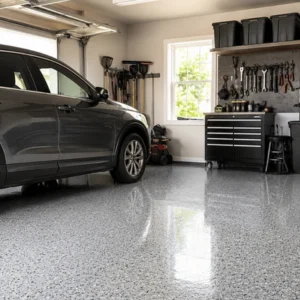
Epoxy is popular because it gives homeowners a cleaner and stronger garage floor.
Key benefits include:
There are also a few things to know before booking.
Important points include:
Many paint and coating chemicals have the potential to release volatile organic compounds (VOCs), according to the EPA. Homeowners should inquire about appropriate ventilation throughout the curing process and low-VOC materials.
In many house garages, a professionally constructed epoxy garage floor can endure ten to twenty years. Prep, coating kind, traffic, and maintenance all affect its lifespan. The floor will survive longer with a sound slab and an appropriate finish.
Plain gloss epoxy can feel slick when wet. Installers can add grit, flakes, or a textured topcoat for better grip. This is a smart choice for Texas garages that get rainwater near the door.
DIY kits are sold in stores, but they often fail due to poor prep. Concrete grinding, moisture checks, and crack repair matter a lot. A pro has the tools to help the coating bond well.
Many standard epoxy floors allow foot traffic after 24 to 72 hours. Cars may need to stay off the floor for 5 to 7 days. Fast-cure systems may allow vehicle use much sooner.
Clean, dry, sound concrete is ideal for epoxy. It might not function effectively on floors with vigorous movement, fragile concrete, or wet slabs. Prior to the quote, there should be a floor inspection.
Epoxy is widespread, durable, and frequently less expensive. Polyaspartic is more UV light-resistant and cures more quickly. Your budget, schedule, and garage utilization will determine the best option.
Epoxy can make a Texas garage cleaner, stronger, and easier to maintain. It helps protect concrete from daily wear, stains, and spills when installed over a sound slab. For Fort Worth, Austin, and Dallas homes, the right system depends on the floor, the budget, and how the garage is used.
Get a free quote today to see which epoxy garage floor system fits your Fort Worth or Austin home.