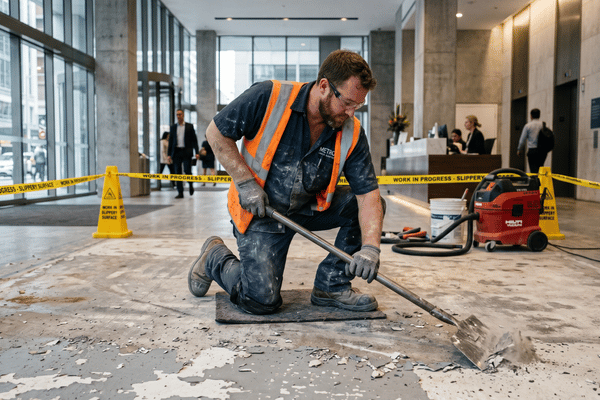
It takes more than just scraping off stray pigment to remove concrete paint. Old paint can prevent new finishes from adhering, conceal weak areas, and retain moisture. Concrete stripping is planned with safety, cleaning, and finish quality in mind by a knowledgeable team that first evaluates the slab and selects the best technique.
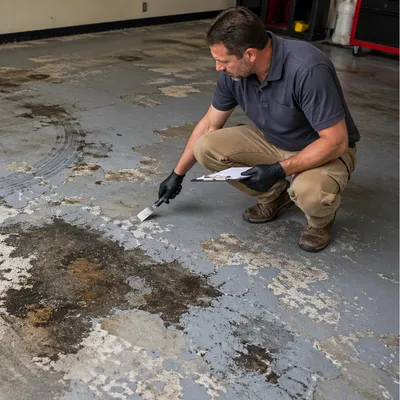
A painted slab usually fails for a few clear reasons:
Good concrete paint removal does not stop at bare concrete. The slab also needs to be clean, sound, and ready for stain, polish, sealer, or a new coating. That is why concrete stripping is often the first step in full floor renewal.
Pros start with a small test patch. They check:
Not all concrete strippers work the same way, so this is important. Some concrete strippers work better with thin paint or sealer. Instead, thick epoxy or shop coatings often need to be ground or shot blasted.
When they need a quick fix, some owners look for powder stripper in TX. That word might mean a chemical choice, but the crew still needs to test the slab, keep an eye on the residue, and keep nearby areas safe.
Diamond grinding is one of the most common methods for concrete paint removal. It uses heavy machines with abrasive tools to cut through paint, coatings, and surface build-up.
Shot blasting is a strong option for large, open concrete areas. It works by throwing small steel shot at the slab, then pulling the debris back into the machine.
Chemical removal uses liquid or paste products to soften the paint so it can be scraped, lifted, and cleaned away. Some concrete strippers work well on thin paint, old sealers, or layers that do not respond well to light grinding alone.
Pressure washing is most useful on outdoor concrete or as a support step after chemical treatment. It can help remove loose paint, rinse away softened material, and clean the slab before the next stage.
Most jobs use one or more of these methods:
Diamond grinding is one of the most common methods for concrete paint removal. It uses heavy machines with abrasive tools to cut through paint, coatings, and surface build-up.
This method works well for thick or stubborn coatings. It is also useful when the floor needs light leveling or extra prep before staining, sealing, or recoating. Many crews use it for garage floors, shop floors, and indoor concrete that needs a clean, even surface.
Shot blasting is a strong option for large, open concrete areas. It works by throwing small steel shot at the slab, then pulling the debris back into the machine.
This method is often used when the goal is not only concrete paint removal, but also surface prep for a new coating. It can create the rough texture needed for strong bonding. That makes it a good fit for warehouses, retail spaces, and other wide floors.
Chemical removal uses liquid or paste products to soften the paint so it can be scraped, lifted, and cleaned away. Some concrete strippers work well on thin paint, old sealers, or layers that do not respond well to light grinding alone.
This method can help in tight areas where machines cannot reach. It may also be used on textured concrete where a tool could miss low spots. In some jobs, crews combine chemical products with mechanical concrete stripping for better results.
Pressure washing is most useful on outdoor concrete or as a support step after chemical treatment. It can help remove loose paint, rinse away softened material, and clean the slab before the next stage.
This method is often used on patios, walkways, and driveways with lighter coatings. It may help with surface dirt and flaking paint, but it usually does not remove thick, bonded coatings on its own. For that reason, it is often paired with other concrete paint removal methods.
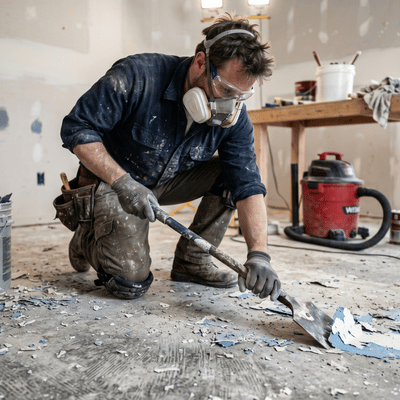
Floor Doctor has served Central Texas since 2012 and works with trained in-house crews, not subcontractors. The company serves homes and businesses along I-35, including Waco, Austin, Dallas, and Fort Worth.
That matters when you need more than paint removal. After concrete paint removal, the floor may still need repairs, profiling, sealing, staining, or polishing. You can learn more about their concrete stripping services before the next step.
A good result is not just a cleaner slab. It is a floor that is ready to last.
First, they test the coating. Then they choose the right method based on the type of paint, the condition of the slab, and the next finish.
It can happen if the wrong tool is used. A trained crew uses controlled methods to keep from making gouges and weak spots.
No. Some concrete strippers work on thin paint, but thick paint usually needs to be removed by hand.
Small jobs outside might go quickly. It takes longer to fix, clean, or do detailed work on big indoor floors.
A lot of owners want a quick chemical answer. Powder stripper in TX still needs to be tested, cleaned up, and thrown away safely in real jobs.
Clear the area and move stored items. Make sure the team has access to power, water, and entry points.
Floor Doctor does more than strip away old coatings. Since 2012, the company has served Central Texas with decorative concrete refinishing, using trained in-house crews instead of subcontractors and commercial-grade equipment built for residential, commercial, and industrial work. That means your slab is not only stripped clean, but prepared with the skill and care needed for the next finish to bond well and last.
If your concrete is peeling, stained, or no longer ready for use, call Floor Doctor to schedule an estimate and get the job handled by a team that knows how to remove failed coatings, prep the surface the right way, and restore the floor with confidence. Serving Waco, Austin, Dallas, Fort Worth, and nearby Central Texas areas, Floor Doctor is ready to help you stop the damage now and move toward a cleaner, longer-lasting finish.